Rising Damp Repairs in Perth
Federation Tuckpointing® has been diagnosing and repairing rising damp in Perth homes for over 35 years. Perth’s sandy soils, coastal humidity and older housing stock, particularly homes built before the 1980s without a proper damp-proof course, make rising damp one of the most common structural problems we see across the metro area.
Every rising damp repair we carry out is backed by our 10-year workmanship guarantee and completed to AS3700 compliance standards. Before we touch a wall, we use a moisture meter to find where the damp is actually coming from, not just where it’s showing up, so the fix we recommend actually solves the problem instead of masking it.
Signs Your Brick Wall May Have Rising Damp
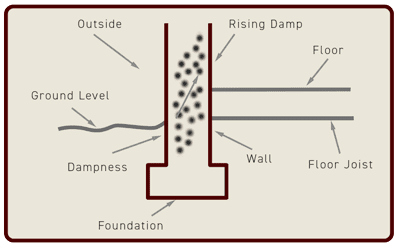
Rising damp, sometimes called salt damp, doesn’t always announce itself straight away.
Watch for:
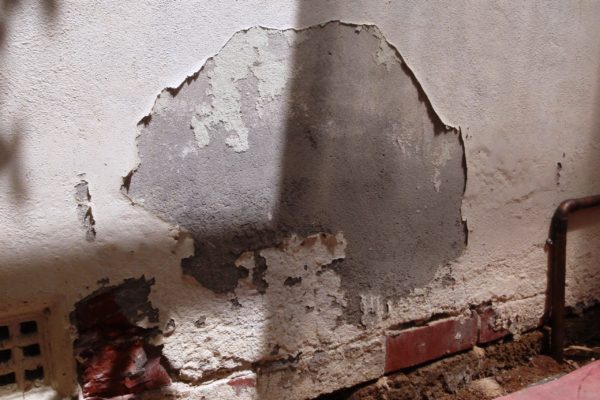
- Bubbling or flaking paint, render or plaster
- Salt stains or efflorescence on brickwork or internal walls
- Mould or musty, damp odours that won’t go away
- Rotting skirting boards or flooring
- Crumbling bricks or fretting mortar
- Tuckpointing lifting or falling away
Left untreated, rising damp doesn’t just sit there. It keeps travelling upward, breaking down mortar, render and brickwork as it goes, and can eventually compromise the structural integrity of the wall, not just the look of it.
These signs do not always confirm rising damp. Plumbing leaks, poor drainage and water entry from outside often create similar damage, which is why the source needs to be assessed before repairs begin.
What Causes Rising Damp in Brick Walls?
On external walls, rising damp is usually caused by:
- Garden beds, soil or paving built up above the damp-proof course
- Reticulation or watering systems running too close to the wall
- Heavy or prolonged wet weather
On internal walls, it’s almost always down to two things:
- A breakdown or failure of the original damp-proof course
- Rubble sitting in the wall cavity, acting as a bridge for water to travel across. It’s often far more rubble than homeowners expect, and until it’s cleared out, the damp has a permanent pathway.
Rising Damp Repairs Before and After
This rendered porch showed bubbling, crumbling and moisture damage caused by rising damp. We repaired the source of the moisture, restored the damaged wall and prepared the surface for a clean finish.
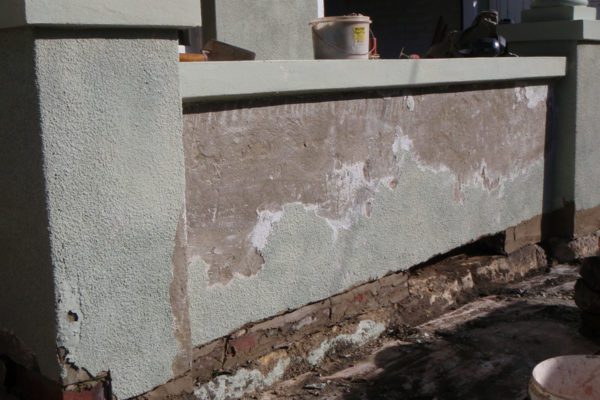
Before
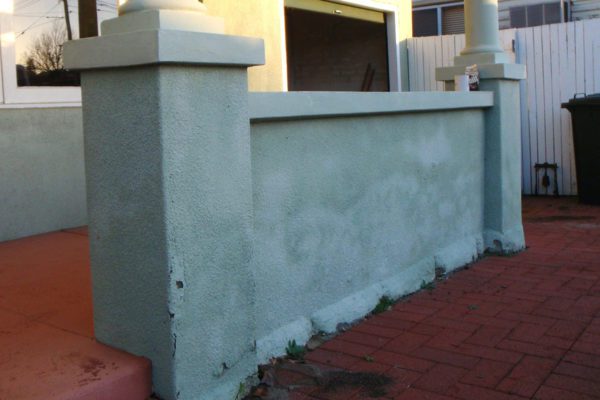
After
Our Rising Damp Repair Process
- Moisture assessment. We use a moisture meter to map exactly where the damp is and trace it back to its actual source, not just where it’s visible.
- Diagnosis. We confirm whether you’re dealing with rising damp, penetrating damp or condensation, and identify the specific cause.
- Treatment. Depending on the wall type and severity, we carry out either the mechanical damp-course method or silicone injection.
- Cavity clearing. Where rubble is bridging the cavity, we remove it as part of the repair. Skipping this step is the main reason rising damp treatments fail elsewhere.
- Restoration. For internal walls, we re-plaster once the new damp-proof barrier is in place, leaving the wall ready for painting.
Rising Damp Repair Methods Used in Perth Homes
There are different damp proofing treatments available depending on what is required to solve the rising damp issue. Perth buildings have different types of brick walls that require different repair approaches. We assess the condition of the damp course and cavity before recommending the most appropriate solution.
- Silicone injection method
Small holes are drilled along the mortar joint or brickwork before a water-repellent chemical is injected into the wall. This creates a new barrier intended to reduce moisture movement.
Injection treatments often cost less than mechanical replacement. Their effectiveness depends on the wall type, condition of the masonry and whether debris remains inside the cavity. The drilled holes also remain visible unless repaired carefully.
- Mechanical damp-course replacement
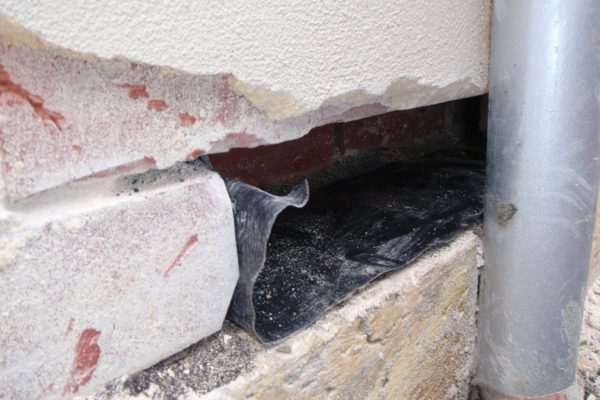
The lowest course of bricks is removed in manageable sections. The wall cavity is cleared of rubble, a new physical damp-proof membrane is installed and the bricks are relaid.
For internal walls, damaged plaster is removed and replaced where included in the scope of work. This method restores a physical damp barrier and allows the cavity to be cleaned at the same time.
Federation Tuckpointing® generally recommends mechanical damp-course replacement for suitable double-brick homes because it addresses both the failed barrier and cavity debris.
Rising Damp
Rising Damp
Why Choose Federation Tuckpointing for Rising Damp Repairs
35+ years repairing Perth homes
350+ 5-star Google reviews
10-year workmanship guarantee
Proven rising damp solutions
Request a Rising Damp Inspection in Perth
Seeing bubbling paint, damaged plaster or fretting mortar near the base of your wall?
Federation Tuckpointing® will assess the affected brickwork, identify the likely source of moisture and recommend the right repair for your property.
Send through photos of the affected area or call our Perth team today.
An early inspection helps prevent further structural deterioration and reduces repair costs over time. Get in touch or call us on (08) 9242 2952 today.
Got questions?
Well, we’ve got answers
Start with a proper assessment rather than assuming the cause. Once we’ve confirmed it’s rising damp, rather than penetrating damp or condensation, and traced where the moisture is entering, we recommend the repair method suited to your specific wall, either mechanical damp-course replacement or silicone injection, along with clearing any rubble bridging the cavity. Surface repairs like repainting or re-rendering won’t resolve rising damp on their own, since they don’t address the damp-proof course itself.
A damp-proof course (DPC) is a physical barrier built into a wall, usually near ground level, designed to stop moisture in the soil from rising into the brickwork above. Many older Perth homes, particularly those built before the 1980s, were constructed without one, or the original damp-proof course has since failed or been bridged by soil, paving or rubble.